
Mechanical Switches vs. Membrane Switches
Membrane switches and mechanical switches both allow users to control a device, but they differ in construction, feel, and design flexibility. The right choice depends on how the interface will be used and the requirements of the application.
What's the Difference?
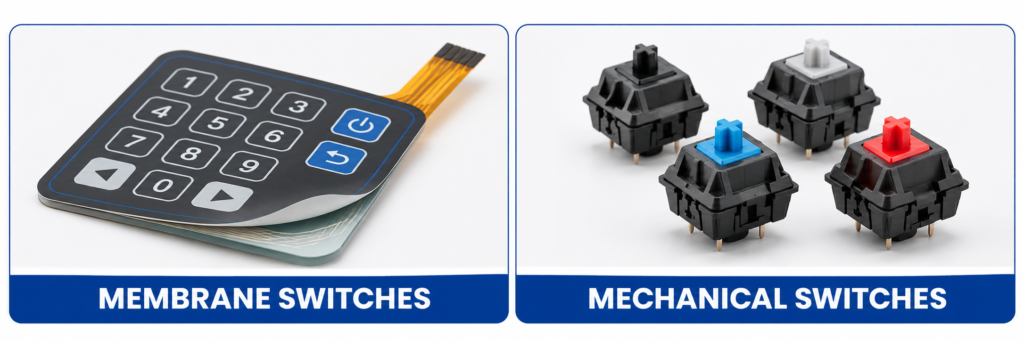
Membrane Switches
Use thin, flexible layers to create an electrical connection when a user presses a key. They can be designed with a flat surface or with metal or polyester domes that provide tactile feedback.
Mechanical Switches
Typically use individual switch mechanisms beneath each key. Their construction offers a range of travel distances and tactile responses, depending on the switch selected.
Design and User Experience
Membrane switches can combine custom graphics, colors, backlighting, and tactile feedback in a thin, integrated interface. Mechanical switches offer a more pronounced key movement and can provide a variety of tactile feels.
Cleaning and Environmental Protection
A membrane switch can be designed with a continuous surface that is easy to clean and helps protect the underlying circuitry. Sealing options depend on the materials and construction selected.
Mechanical switches can also be incorporated into protected assemblies, but their raised keys and separate components may require different cleaning and sealing considerations.
Cost
Cost depends on the design, materials, features, and production quantity. A custom membrane switch may be a practical option when an application calls for an integrated graphic interface, particularly at higher production volumes.
Which Is Right for Your Application?
Consider the operating environment, desired key feel, available space, appearance, and expected usage. CSI Keyboards can help you evaluate your requirements and develop a custom interface for your product.