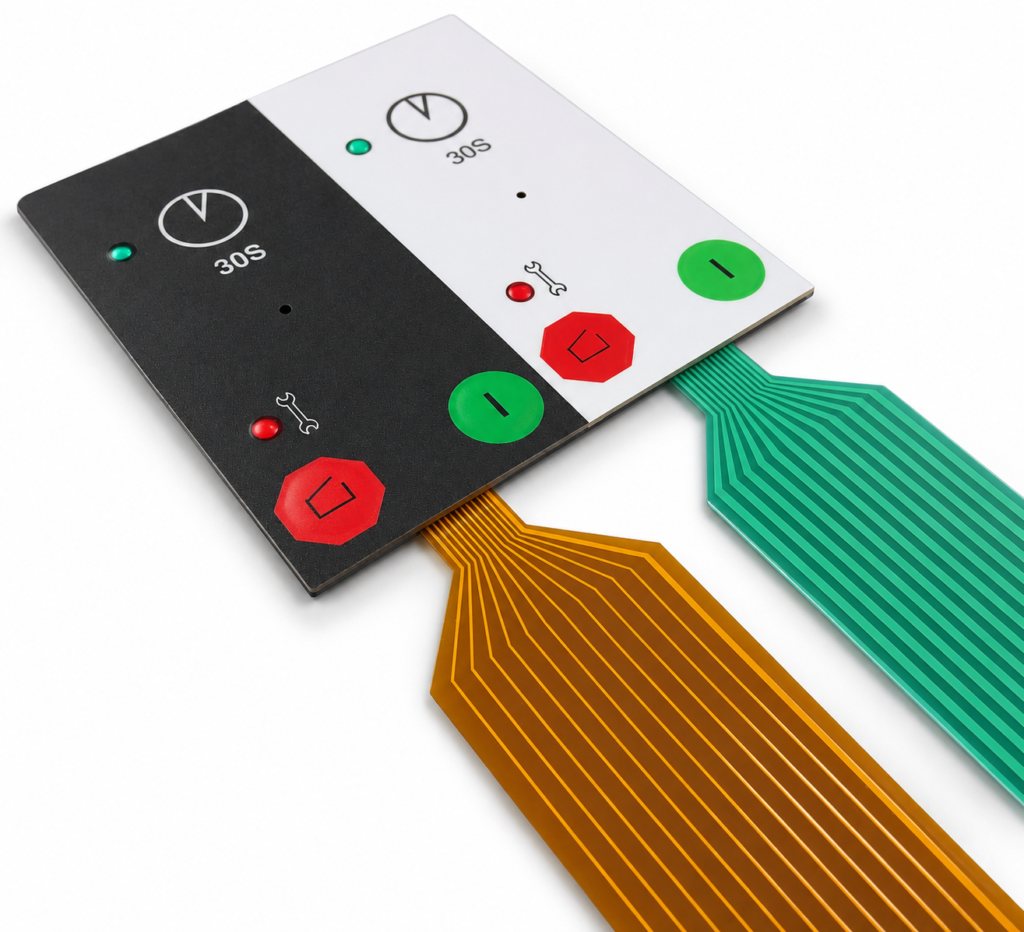
Embedded components add functionality to membrane switches, but their attachment method and the way the circuit flexes can affect long-term performance.
In one customer design, CSI identified a fractured conductive epoxy connection and evaluated copper flex circuitry with soldered LEDs as an alternative.
The Case Against Printed Silver Circuitry: Embedded Components
When a connection fails under flex
A customer sent CSI samples of a printed silver membrane switch whose LEDs operated when flat but sometimes flickered or failed when the keypad or its tail was flexed. CSI identified fractures in the silver epoxy at the connection to the printed circuit trace. In this case, the failure was at the attachment, not the LED itself.
Considering copper flex circuitry
The original design used printed silver ink on polyester with LEDs attached using conductive epoxy. Copper on polyimide flex circuitry can support soldered LED connections and may be an alternative where component attachment and mechanical stresses are concerns.
Printed silver remains useful in many applications. The right choice depends on flexing, component placement, assembly, cost, and environmental requirements; the complete design should be validated through appropriate testing.
Design for the application
CSI has used copper flex circuitry in custom keypad assemblies for medical, automotive, military, and marine applications. Our engineering team can help evaluate circuit materials, component attachment, and strain relief for your product.