
Membrane switches intended for outdoor use are most susceptible to fading from sun exposure. Being constantly exposed to the sun’s ultraviolet (UV) rays will eventually cause the outer graphic overlay layer to fade over time. In many cases, the keys will eventually become transparent or otherwise difficult to see preventing users from being able to distinguish between the different keys.
An outdoor weatherable hardcoat material is essential when designing a membrane keypad that is used outdoors. The UV weatherable material utilizes a coating technology that resists yellowing and hazing, no matter how bright the sun is. Along with good UV resistance, this material also has chemical and abrasion resistance. This material is the perfect choice for outdoor keypad applications.
Additional Key Benefits of the UV Weatherable Material:
A keyboard matrix circuit is a type of keyboard that has a grid-like array of horizontal and vertical wires connecting the key switches. If the keyboard features 8 rows and 8 columns of wires, for instance, it can support up to 64 keys. The switches are located at the intersection of these wires. Keyboard matrix circuits contain a scanner or sensor that monitors these wires and is constantly scanning the grid determining which key has been pressed. The main advantage of using a matrix circuit design is the reduction of required wires.
The matrix arrangement allows for current to flow backwards through part of the circuit, which can lead to phantom keys. Keyboard matrix circuits usually require diodes at the intersections of the wires to prevent phantom keys. Phantom keys, also known as “ghost keys” occur when the keyboard thinks that a key is pressed when it is actually not pressed at all. The diodes are typically placed in series with each switch (before or after).
Membrane Switch Construction
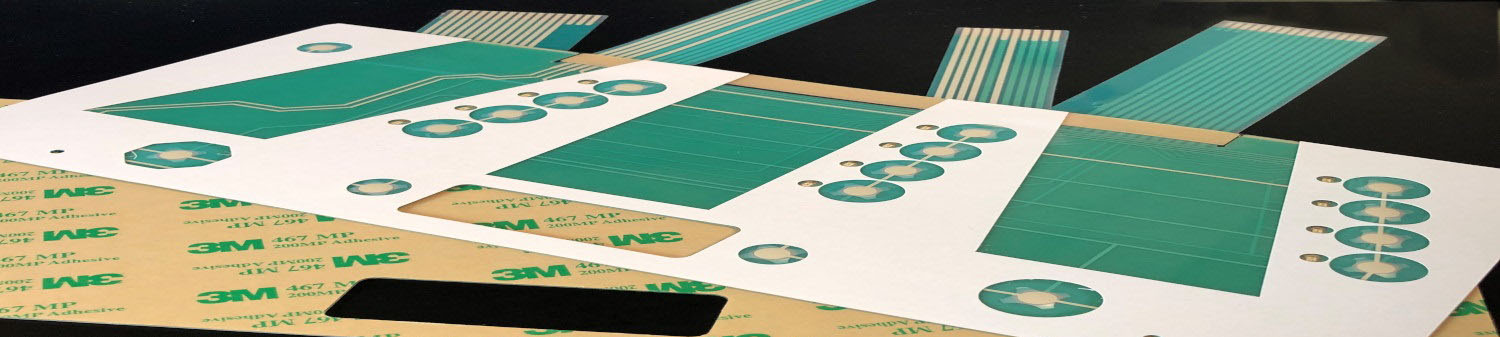
A typical membrane switch assembly typically consists of six to seven main layers:
1. Graphic/Interface Layer – The graphic or interface layer is typically constructed of polyester, the material of choice due to its superior chemical resistance and flex life compared to polycarbonate. CSI can either digitally print, screen-print, or employ a combination of both methods to insure you get the right colors, textures, and finishes your Silver Flex membrane switch design requires. The interface layer can also be molded silicone rubber which has become a very popular choice.
2. Overlay Adhesive – The overlay adhesive layer bonds the graphic overlay to the top circuit layer. This overlay adhesive is typically an acrylic adhesive, selected for its durability and ability to maintain adherence in atypical environments, such as moist environments.
Top Circuit Layer – Typically a .005″ – .007″ heat-stabilized, polyester printed layer with silver-filled, electrically conductive inks and dielectric inks. This layer can also encapsulate metal domes or incorporate polydomes, which are used to achieve tactile feedback, an important design consideration impacting usability.
3. Circuit Spacer – This layer separates the top circuit from the bottom circuit, so the switch remains normally open until the keypad is pressed. The circuit spacer is a polyester spacer with adhesive on both sides.
4. Lower Circuit Layer – The lower circuit layer is typically a .005″ – .007″ heat-stabilized, polyester-printed layer with silver-filled electrically conductive inks and dielectric inks. This layer terminates as a flexible tail that serves as the interconnect to controller PCB’s or other electronics.
5. Rear Adhesive Layer – This adhesive layer bonds the entire membrane switch package to the product enclosure, housing, or to a rigid support panel. CSI can specify the appropriate adhesive type and thickness to bond your membrane keypad to your equipment.
6. Rigid Support Layer – This optional layer can add structural integrity to the membrane switch assembly. Materials can be aluminum, FR-4, steel, etc. Mounting hardware such as studs and standoffs can also be utilized in this layer.
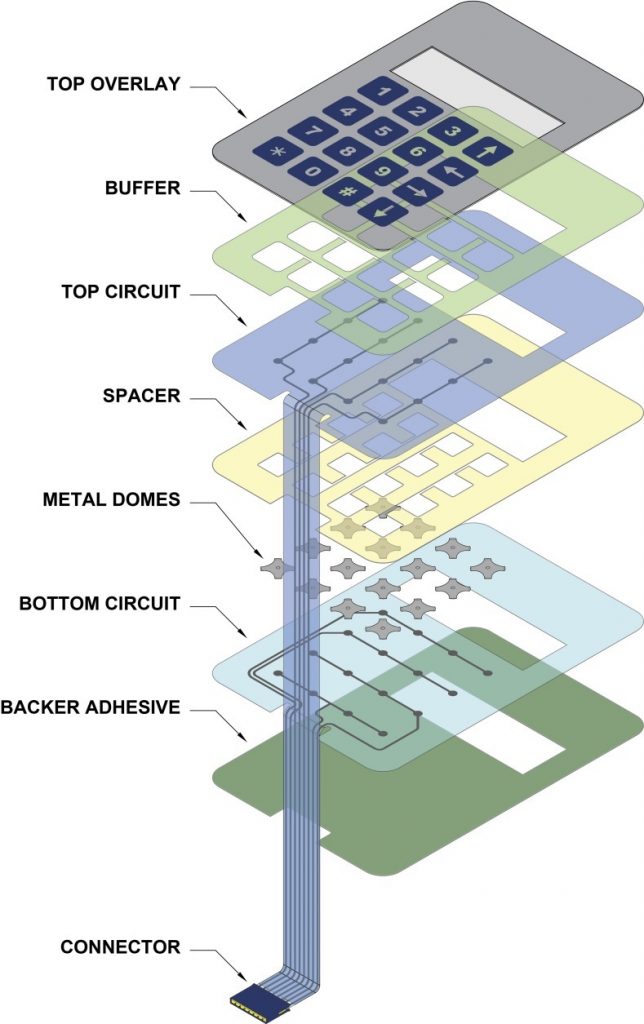
When designing a membrane switch, one of the most critical aspects that must be decided early-on in the design stage is the circuit type. The whole design and construction of the part is based around the type of circuitry that is used. The three types of circuitry options are: silver flexible circuits, copper flex circuits, or printed circuit board (PCB). If you are unsure as to what circuit is best for your application, CSI can work closely with you in proposing which option is ideal for the design.
Silver Flexible Membrane Switches
Silver Flex membrane switch panels utilize screen-printed silver and carbon conductive inks printed on flexible polyester layers separated by an adhesive spacer. This is the most common design used in flexible, custom membrane keypads, offering a slim, space-saving design.
Silver Flexible circuity is also more cost-effective when compared to electromechanical switch assemblies and the process of screen-printing conductive silver inks onto a flexible, film substrate poses less potential threat to the environment compared to chemically etched copper.
Silver Flex membrane switches offer you a variety of design options:
Additionally, a Silver Flex membrane switch uses a graphic overlay, which also has a number of design options:
The Copper Flex Membrane Switch constructions are ideal for smaller designs, where space is at a premium, or where dense circuit patterns or trace routing limitations exist. Copper Flex membrane keypads utilize silver or copper layers which are laminated to a dielectric layer and etched away.
This switching technology combines the ability to accommodate the complex circuit patterns of a FR4 rigid printed circuit board with the flexibility of a membrane switch. Copper Flex keypads also have the advantage of being able to “hard” solder both active and passive components into the assembly, making it a good choice in high-vibration environments.
Copper Flex membrane switch panels can be produced using polyester or polyimide (Kapton) as the base material depending on your interface requirements. A very thin sheet of copper is laminated to the flexible film substrate then chemically etched away, leaving copper traces.
Copper Flex membrane switches offer you a variety of design options:
PCB Based Membrane Switches
The PCB Membrane Switch construction utilizes a printed circuit board (PCB) which can serve a dual purpose in your membrane switch design. PCB Switches are typically more costly than Silver Flex membrane keypads, but can accommodate dense circuit patterns and more complex circuit patterns compared to Silver Flex membrane keypads.
A PCB membrane switch also allows the electronic components to be “hard-soldered” into the PCB, whereas membrane switch components are placed using a polymer thick film conductive paste. With a PCB membrane switch, the PCB can serve as a rigid backer, and is also a very durable and reliable method to incorporate LED’s, resistors, LCD’s and other components.
PCB membrane keyboards offer you a variety of design options:
To provide tactile feel to a membrane switch or graphic overlay, the polyester or polycarbonate material can be embossed to raise the key area. Embossing is achieved by raising the key area using magnesium membrane switch overlay embossing dies. Embossing has really become standard in membrane switch designs. Not only does it give it a better look and feel, but it also allows the user of the end product to find the key with ease and provide tactile confirmation that the button is present even before it’s pressed.
There are essentially three options when it comes to embossing membrane switches:
1. Pillow emboss
2. Rim or perimeter emboss
3. LED or Braille emboss

A common issue that many membrane switch manufacturers have when backlighting keypads are hot spots. A hot spot occurs when the light source used for backlighting doesn’t evenly distribute the light causing some areas to appear brighter (hot spot), while other areas are dimly lit.
CSI Keyboards is a global leader in membrane switch backlighting and interface backlighting technology. Whether backlighting a logo, individual keys, or the entire interface surface, CSI will design and manufacture a backlit membrane keypad switches or backlit interface that will stand out both visually and aesthetically. Backlighting on a membrane switch can be a simple and cost effective solution to enhance the user experience.
Evenly lighting a large area with a small light source like an LED can be challenging. The main challenges are the size of the backlit area, the amount of LED’s that can fit in the area, and the proximity of the LED’s to the backlit feature. Backlighting a small icon can be relatively easy, but the larger the backlit area, the more difficult it will be to evenly light the graphic without the appearance of hot spots. This is especially true if there is not enough room to place multiple LED’s surrounding the backlit feature.
How to Avoid Hot Spots
CSI Keyboards is an expert and integrating Light Guide Film (LGF) into our backlit solutions to prevent hot spots from occurring. Light Guide Film is designed to evenly distribute light from top or side firing LEDs, providing bright, uniformed illumination. It also reduces the amount of LEDs needed, saving power consumption. More on light guide film technology below. The design and utilization of light guide film technology has become one of the most common methods of interface backlighting. CSI Keyboards uses proprietary techniques to design the light guide film so it is optimized for light redirection and reflection giving the customer the brightest possible backlighting solution. Light guide film dots are also designed and implemented which allow for the optimization of light distribution to obtain maximum brightness and uniformity. Common problems that many of our competitors face are light leakage and hot spots. CSI’s backlighting designs prevent any light leakage and hot spots from occurring, and also result in much brighter light guide film and interface.
It’s always important to remember that the earlier CSI is involved in the design process the better. It’s a lot more difficult completely redesigning the backlighting layout, versus ensuring it is right from the onset of the design process!
The connector on a membrane switch assembly is one of the most critical aspects of the machine interface as the connector attaches the membrane keypad to the product it will control. Without the connection working correctly the membrane switch is essentially useless. Connectors consist of contacts and a molded plastic housing.
The standard for membrane switch connectors has always been the female type receptacle with a plastic housing, typically on .100” centers. This system is simple but extremely reliable. The housings can also be equipped with a latching/locking mechanism which can serve as a polarization feature, but more importantly, can provide a connection that will not slip or vibrate loose during extreme conditions. The receptacle can come with a tin plating or a gold plating.
As membrane switches continue to get smaller and smaller in design, the 1mm center ZIF (zero insertion force) style connection system is becoming more and more popular. With a ZIF connector membrane switch design, the interface does not have a connector assembled to the flexible tail. Instead, the tail design is designed to slide and lock into a connector on the user’s printed circuit board. A stiffener is laminated under the tail to ensure stability and maintenance of the electrical contact. Tails are also constructed with conductive silver tracks that are then over-printed with carbon. The carbon provides a good protective cover over the silver and also battles the phenomenon of silver migration. ZIF connectors may have anywhere from 2 to 30 positions on a single row, and distances of between 1mm and 2.54 mm are available. Additional information on the the types of connectors CSI typically likes to design into their membrane switch assemblies can be found on our Material Specifications page.
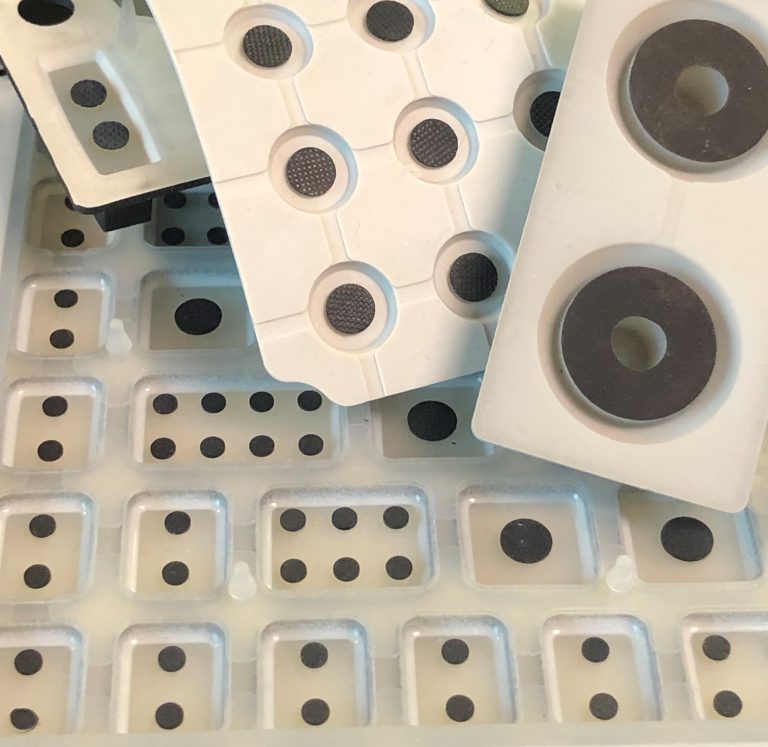
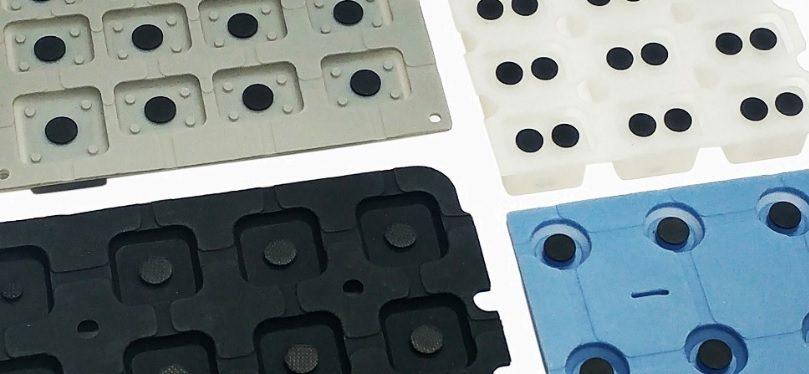
A typical silicone rubber keypad involves designing a flex wall around the perimeter of the button. When the key is pressed, the flex wall flexes and produces a tactile response (similar to a spring). When the key is fully pressed, the flex wall allows the center of the key to make contact with the circuit.
In rubber keypads, there are typically two methods of making contact with the actual switch: dome switches or conductive carbon pills. Conductive carbon pills are typically manufactured from a silicone conductive material that contains carbon. Conductive pills are molded into the actuators of the keys. When the carbon pill makes contact with the circuit, it is closing the circuit on a printed circuit board or flexible circuit trace.
Conductive carbon pills are usually silicone based and can be round, oval, or rectangular in shape. Carbon pills can range in size depending on the size of the key but typically available from 2.0mm to 8.0mm in diameter. Multiple carbon pills can also be utilized and designed into the part to ensure solid contact is made depending on the key shape, size and design of the keypad.
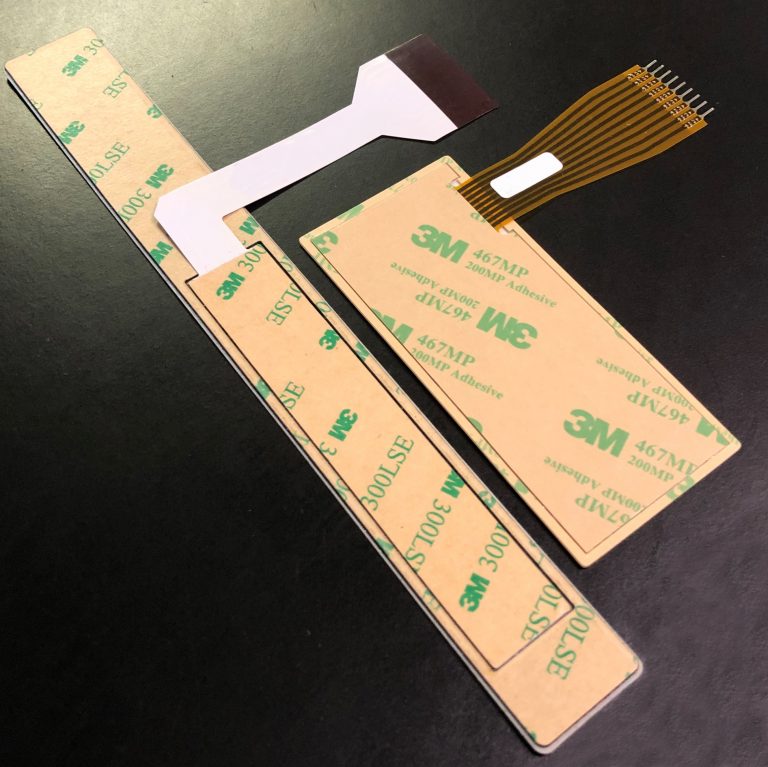
The Achilles heel for membrane switch sealing is most always the flex tail breakout area. The tail typically breaks out of the rear of the switch and because the tail is made of the same material as the circuit, a filler piece replaces the ribbon cable shape in the materials of the membrane switch. The gaps on either side of this tail filler is typically where moisture can enter the membrane switch.
A gasket or perimeter seal frame design can solve this problem. A membrane switch with a gasket or perimeter seal does not have a tail filler therefore there is no direct pathway for liquid ingress. CSI Keyboards’ perimeter seal frame switches have proven to be as robust as other sealing methods such as perimeter temperature sealing and can be included in your design at minimal additional cost.
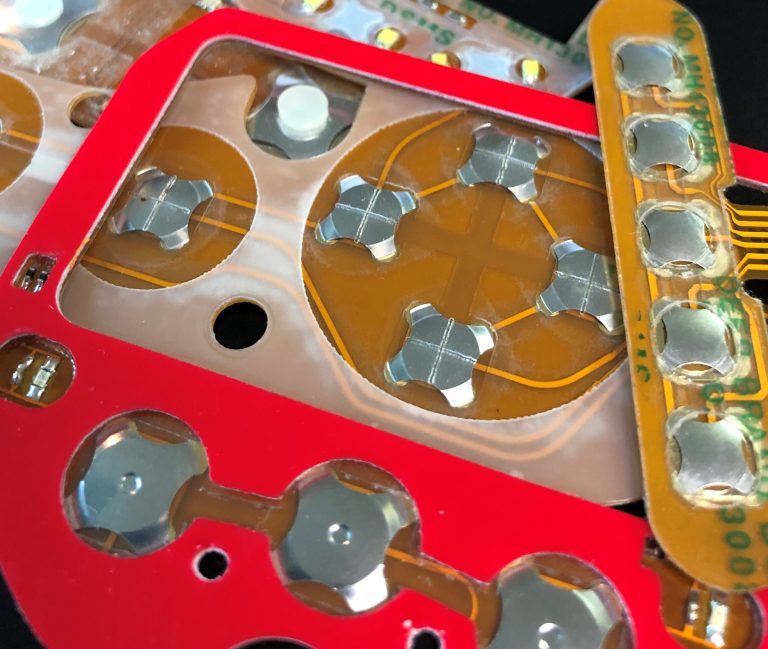
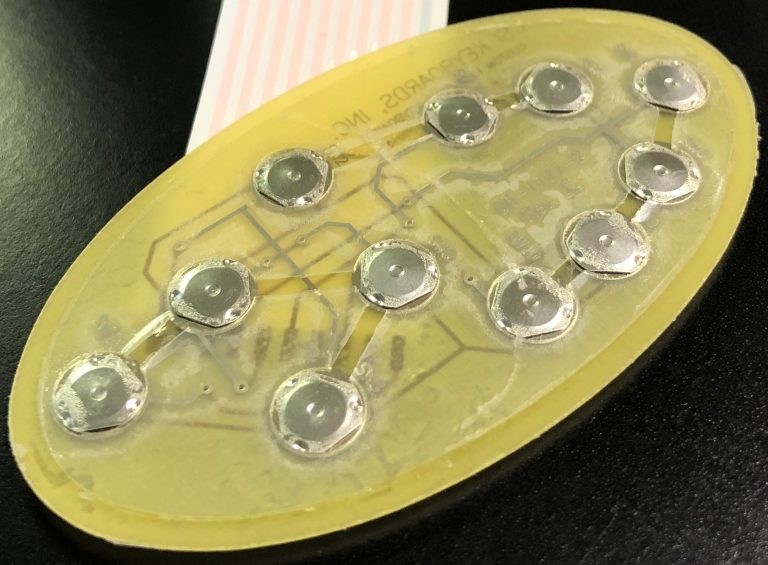
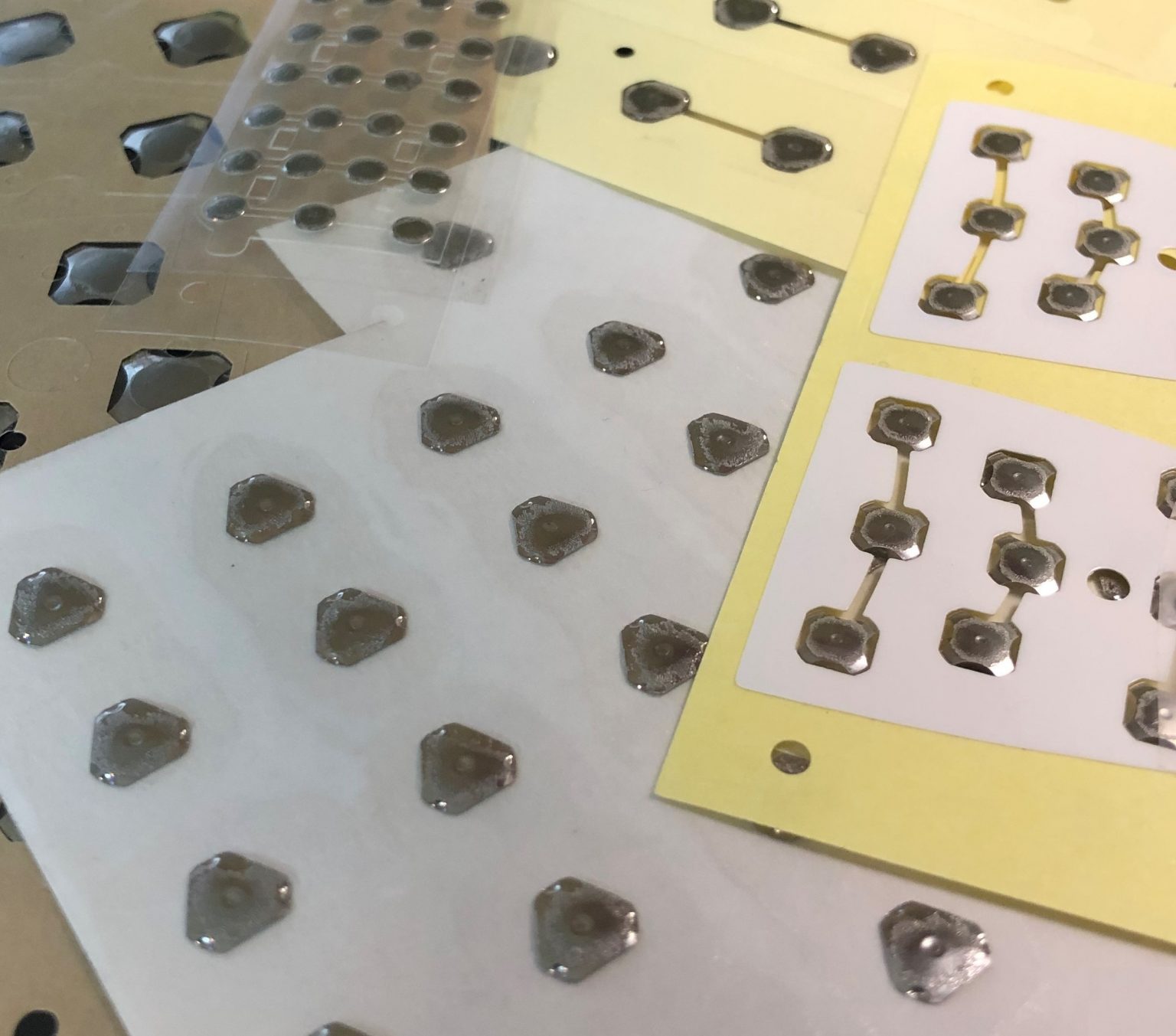
CSI Keyboards designs domes into the majority of our membrane switches. Dome switch keypads use two circuit board traces in conjunction with a metal dome. Metal domes, which are typically made of stainless steel, are momentary switch contacts that provide tactility or “snap” when pressed. The domes become normally-open tactile switches when actuated on the circuit.
The main advantage of dome switch keyboards is the tactile snap or feedback when actuated. When pressing the key, the user realizes they have actually actuated or successfully pressed the switch due to the feel and sound feedback received from the dome.
Another major benefit of the dome switches are the the long lifespan and reliability. Standard dome switch keypads are now rated from one million to even five million cycles. They are still the most reliable type of switch available in the membrane switch space.
Dome Options:
How Do I Choose the Right Dome for my Membrane Switch?
The CSI engineers will work very closely with you in deciding which dome is best for your application. Typically the decision is based on the force of the dome (how soft or hard of a press it takes to actuate the dome) and is extremely subjective. CSI can mock up different sample keypads with different dome options so the customer can decide through a more “hands-on” approach.