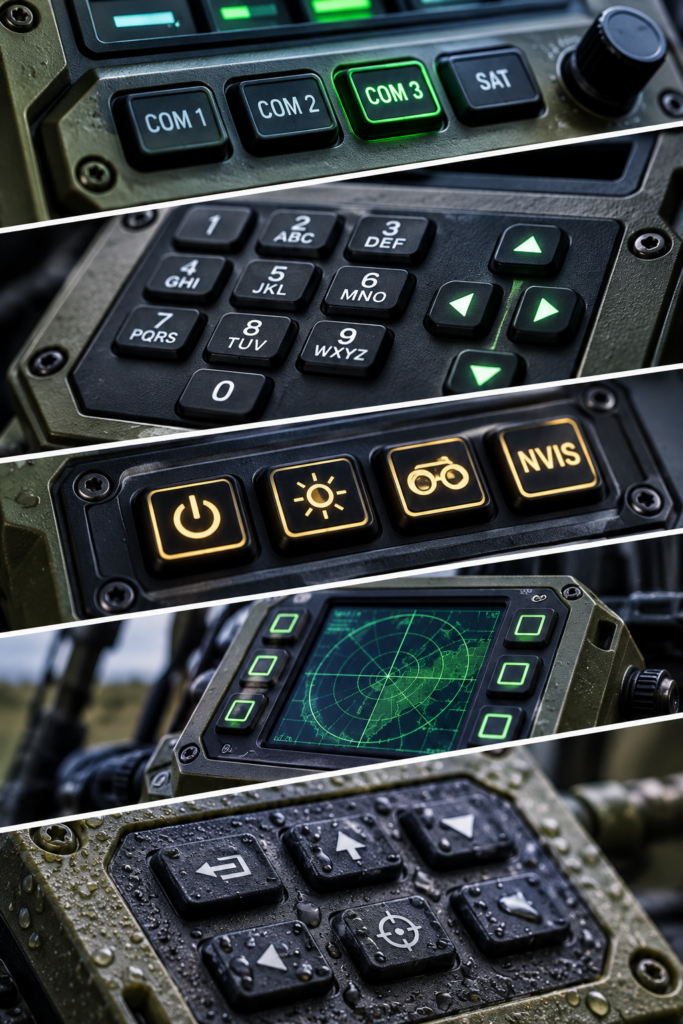
What Is a Membrane Switch?
What Is a Membrane Switch & How Does It Work?
A membrane switch is a thin, customizable electronic interface that allows users to control equipment, machinery, and electronic devices through the press of a button. Commonly used in industrial controls, medical equipment, instrumentation, and consumer products, membrane switches provide a durable, space-efficient alternative to traditional mechanical switches.
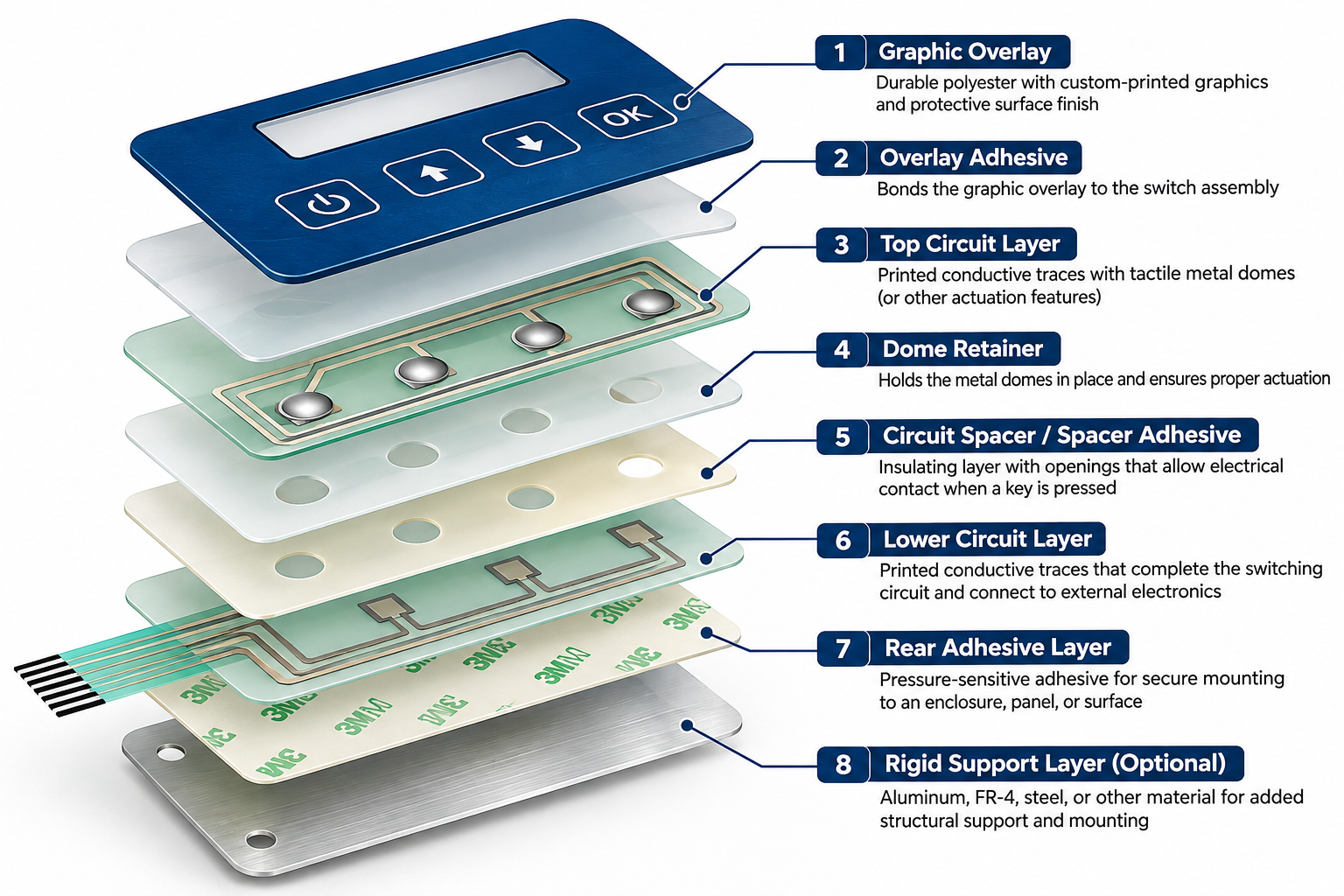
Membrane switches typically consist of multiple layers, including a graphic overlay, adhesive layers, and conductive circuitry. When a button is pressed, the circuit makes contact and sends a signal to the connected device. Circuitry can be manufactured using printed conductive inks, copper flex circuits, or printed circuit boards (PCBs), depending on the application’s requirements.
At CSI Keyboards, we design and manufacture custom membrane switches with options such as tactile feedback, LED backlighting, environmental sealing, and integrated electronic components—creating reliable, application-specific human-machine interfaces (HMIs).
Inside a Membrane Switch
A closer look at the layers behind the interface
- Graphic Overlay – The visible outer layer, typically made from durable polyester, features custom-printed graphics, legends, and protective surface finishes.
- Overlay Adhesive – A specialized adhesive bonds the graphic overlay to the underlying switch layers, helping maintain assembly integrity.
- Top Circuit Layer – Printed conductive traces form part of the electrical switching system and may incorporate tactile metal domes or other actuation features.
- Dome Retainer Layer – Holds the metal domes in place and ensures proper actuation.
- Circuit Spacer – An insulating spacer separates the conductive layers and allows electrical contact to occur when a key is pressed.
- Lower Circuit Layer – Contains printed conductive pathways that complete the switching circuit and connect the keypad to external electronics.
- Rear Adhesive Layer – Pressure-sensitive adhesive secures the membrane switch assembly to its enclosure, panel, or mounting surface.
- Rigid Support Layer – Aluminum, FR-4, steel, or other backing materials can provide structural support and mounting options.
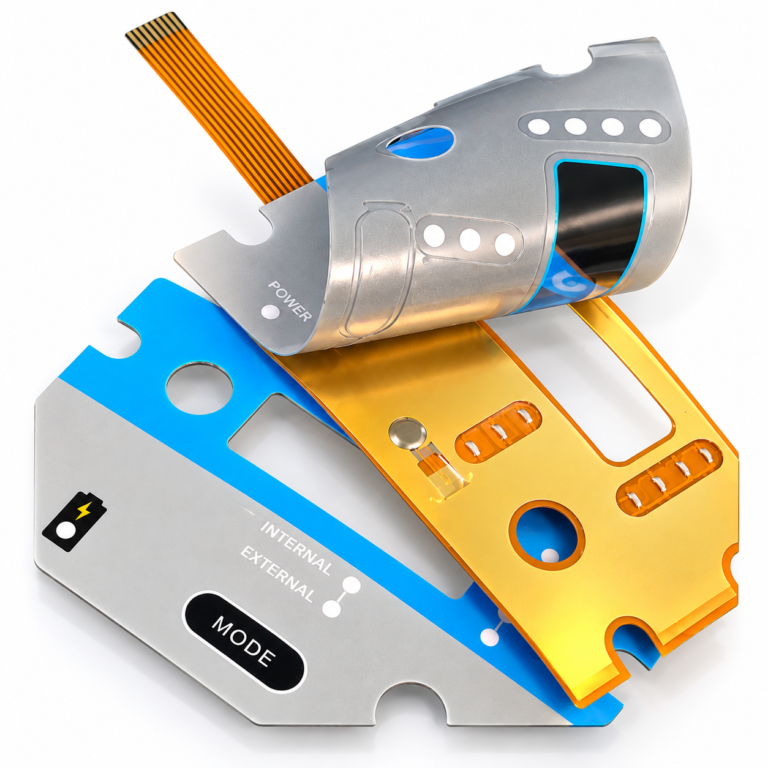
Copper Flex Circuitry
CSI Keyboards integrates custom copper flex circuits into membrane switches, silicone rubber keypads, and human-machine interface (HMI) assemblies. Manufactured using copper conductors on flexible polyimide substrates, these circuits offer excellent electrical conductivity, mechanical flexibility, and reliable connections for demanding applications.
Compared with printed silver circuitry, copper flex designs offer additional options for fine-pitch routing, component integration, and complex circuit layouts.
-
Flexible & Durable Construction
Copper conductors on polyimide substrates support compact designs, repeated flexing within design limits, and reliable electrical performance. -
Component & Circuit Integration
Copper flex circuits support soldered components, complex electrical layouts, and integration with custom keypad assemblies. -
Electrical Performance
Copper traces provide excellent conductivity and support low-resistance circuit paths for dependable switching and signal transmission. -
Fine-Pitch Circuit Routing
Precision copper traces accommodate intricate circuit patterns, compact layouts, and high-density electrical connections. -
Thermal & Environmental Performance
Polyimide-based copper flex constructions offer thermal stability and chemical resistance for applications requiring robust circuit materials.
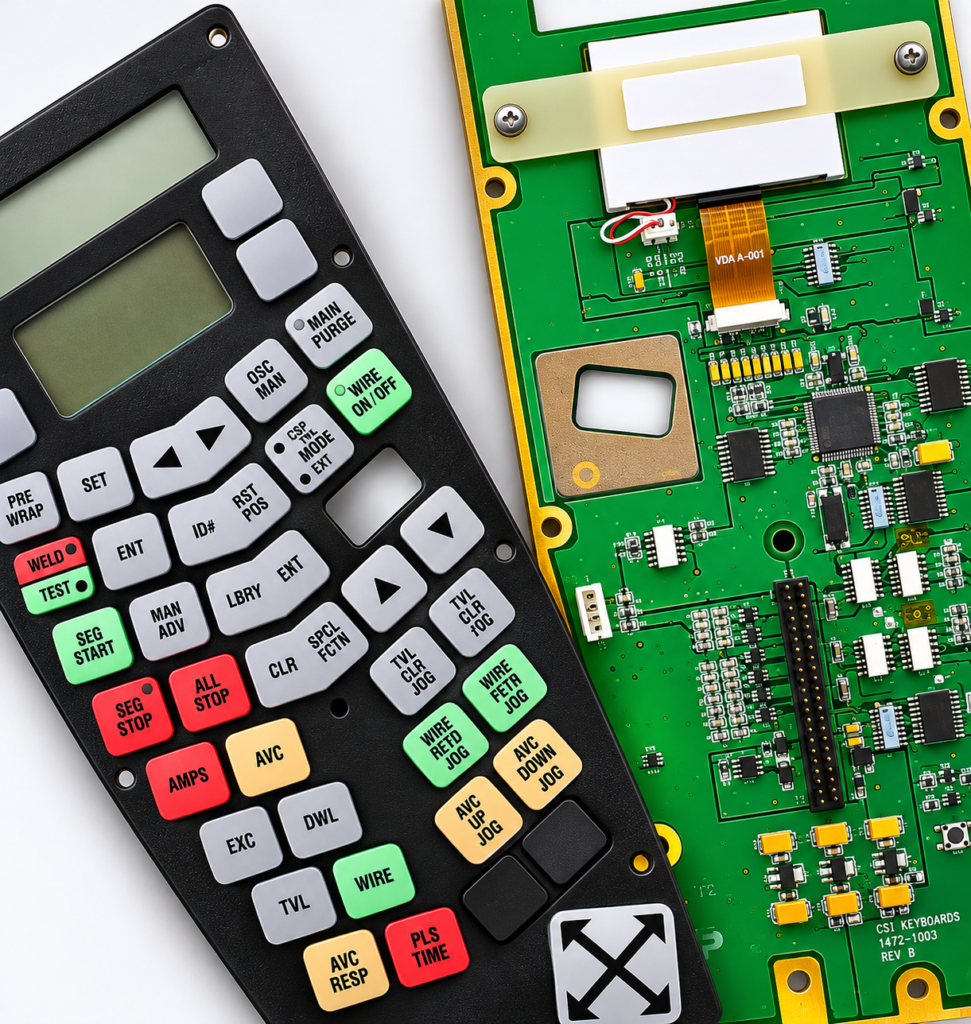
PCB-Based Membrane Switches: Integrated Circuit Solutions
PCB-based membrane switches combine the familiar operation of a membrane keypad with the electrical and structural capabilities of a printed circuit board (PCB).
Unlike conventional flexible-circuit membrane switches, PCB-based designs use a rigid circuit board that can accommodate more complex circuitry, soldered electronic components, and integrated connections. The PCB can also serve as a structural backing, making this construction particularly useful for sophisticated control interfaces requiring additional electronic functionality.
-
Integrated Electronics & Circuitry
Rigid PCBs support complex circuit layouts and soldered components, including LEDs, resistors, connectors, and display interfaces. -
Tactile & Non-Tactile Feedback
Metal dome and other switch configurations provide responsive operation tailored to the application's requirements. -
Custom Backlighting & Displays
Integrated LEDs, electroluminescent lighting, and other illumination options enhance visibility and interface functionality. -
Rigid Construction & EMI/RFI Shielding
PCB construction provides structural support and can incorporate shielding features to address electromagnetic interference. -
Flexible Connectivity & Customization
Custom connectors, graphic overlays, embossed keys, and mounting configurations support application-specific designs.
Custom Silicone Rubber Keypads
CSI Keyboards designs and manufactures custom silicone rubber keypads with tailored tactile response, durable materials, specialized finishes, and integrated electronic components to meet your application’s functional and environmental requirements.
Custom Silicone Molding & Design
Precision-molded silicone keypads with customizable shapes, colors, durometers, key geometries, and embossed features.
Tactile Feedback & Switching
Engineered key travel, actuation forces, and tactile response with conductive carbon pills, metal domes, and rubber actuators.
Protective Coatings & Sealing
Polyurethane, parylene, and UV-resistant coating options, along with sealing solutions for moisture, dust, and chemical exposure.
Circuitry & Electrical Integration
Integration with flexible printed circuits, printed silver circuitry, rigid PCBs, and custom electrical connections.
Backlighting & Laser Etching
LED illumination, light piping, translucent silicone, and laser-etched legends for clear, customizable backlit controls.
Custom Assemblies & Control Panels
Multi-material assemblies combining silicone rubber, graphic overlays, switches, enclosures, and other interface components.