Choosing the right membrane switch or keypad partner starts with understanding your application. Use this checklist to define your requirements, compare suppliers, and keep your project moving from design through production.
Sourcing a Membrane Switch or Keypad Assembly: Initial Checklist
1. Define the operating environment
Where and how will the interface be used? The answers help determine the materials, construction, and sealing your application needs.
- Environmental exposure: Consider moisture, temperature, chemicals, cleaning agents, and other conditions the product may encounter.
- Service life: Estimate how frequently the keys will be used and the durability your application requires.
- Mounting and integration: Identify the mounting surface, available space, and how the interface will connect to your electronics.
2. Select the right construction and features
Discuss the user experience and electrical requirements early in the design process. Depending on the application, options may include copper flex or silver printed circuitry, embossed membrane keys, or silicone rubber keypads.
- Backlighting: Individual LEDs can illuminate specific keys or indicators, while light guide film can provide illumination across a larger area.
- Adhesive and sealing: Allow adequate bonding area around the perimeter and between features. Insufficient adhesive space can contribute to delamination or moisture ingress.
- Connections: Review the circuit tail, connector, and mating electronics together so the assembly fits your product.
3. Look for engineering and quality support
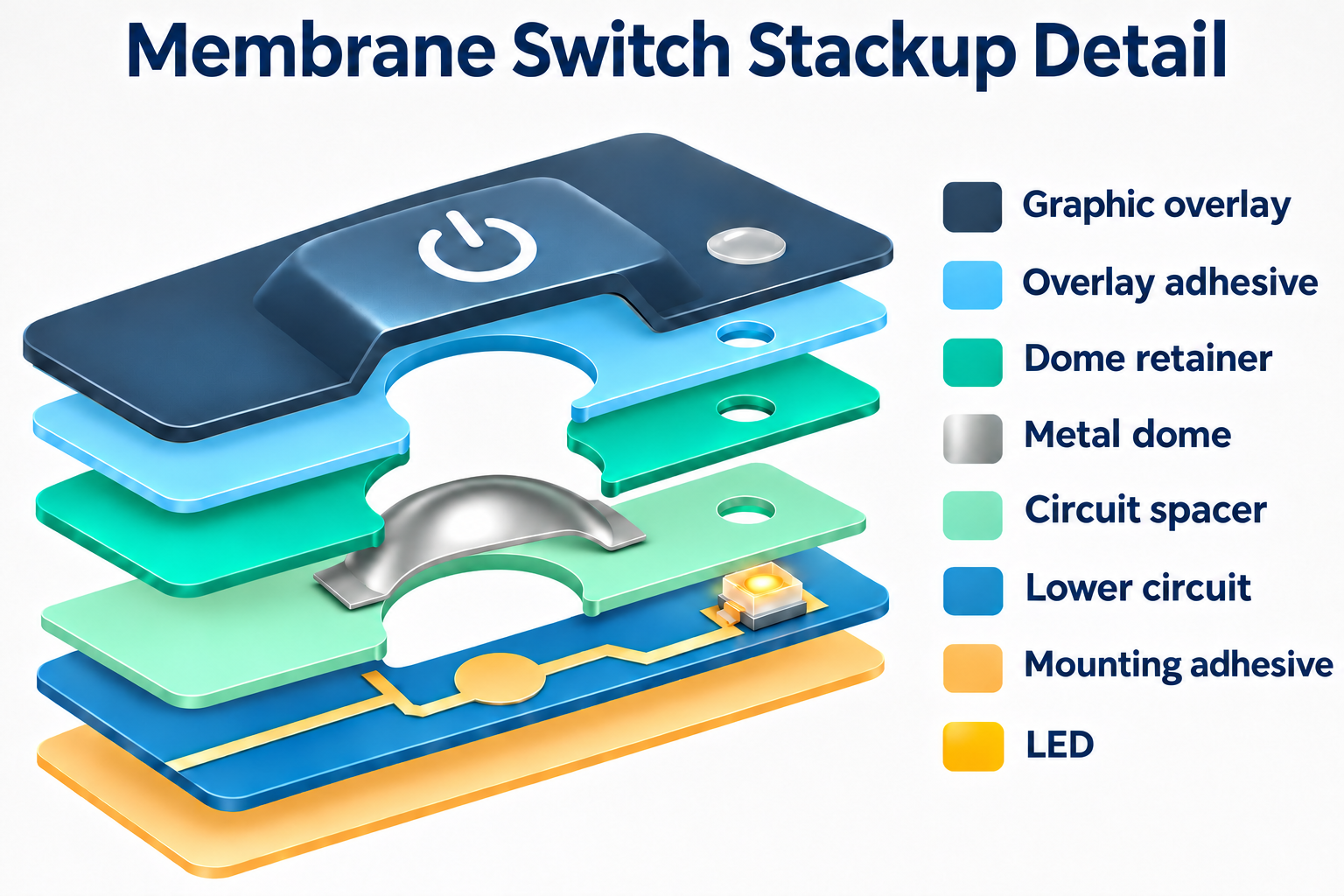
A membrane switch is a layered assembly. The graphic overlay, circuitry, spacer, adhesives, and any support backer must work together in the finished product. An experienced engineering team can help identify potential issues early and select a construction suited to your requirements.
When comparing manufacturers, ask about their quality systems and certifications, design review process, prototyping capabilities, and access to engineering support. For U.S.-based teams, domestic engineering support can also simplify communication throughout development.
4. Compare the complete project cost and supplier response
A useful quote should make it clear what is included. Review unit pricing alongside non-recurring engineering (NRE), tooling, setup charges, and expected quantities. Ask how design changes, schedules, and production updates will be communicated.
Look for a responsive partner who can support the project from the first discussion through prototyping and production.
Ready to discuss your project?
Whether you have a detailed specification or an early concept, CSI Keyboards can help you explore the right interface for your application.